UT Austin and Space Force launch lab to develop space battle-management software
Key Highlights
- The lab will help mature software from technology readiness level 0 through level 4.
- UT Austin professor Moriba Jah will lead the lab, based in the Cockrell School of Engineering.
- Selected teams can access the Space Object Situation Room, GaiaVerse computing, and secure resources at the Texas Advanced Computing Center.

AUSTIN, Texas - The University of Texas at Austin and the U.S. Space Force have launched the Battle Management, Command, Control, Communications, and Space Intelligence (BMC3I) Tools, Applications, and Processing (TAP) Lab Texas to advance early-stage software development for military space operations.
The lab will help academic researchers and commercial developers mature software from technology readiness level (TRL) 0 through TRL 4, connecting early-stage research with Space Force operational requirements. At TRL 4, technology components or systems have been validated in a laboratory environment.
The Texas lab complements the BMC3I TAP Lab in Colorado Springs, Colorado, which supports further technology maturation and transition toward operational use. Both efforts support the Space Force's BMC3I portfolio and the Kronos program, which develops space battle-management capabilities.
"By embedding the TAP Lab at UT Austin, we are putting world-class astrodynamics research and supercomputing power directly into the future Kronos pipeline for delivery to our warfighters," said U.S. Space Force Lt. Col. Collin Greiser, System Delta 85 system program manager for the Advanced Space Battle Management Program. "This allows us to rapidly prototype and field software that takes advantage of the inherent strengths of academia for our space battle managers, giving them the decisive options in a contested domain."
Related: Viasat wins $450 million Space Force contract for space data network operations
Longhorn leaders
Led by Moriba Jah, a UT Austin professor and astrodynamicist specializing in space object detection, tracking, identification, and characterization, the lab is part of the university's Cockrell School of Engineering Department of Aerospace Engineering and Engineering Mechanics.
The lab is intended to address barriers that can slow the transition of early-stage research into military applications, including proprietary licensing, specialized test infrastructure, and military compliance requirements. Academic and industry partners will form project teams to develop software aligned with Space Force innovation priorities.
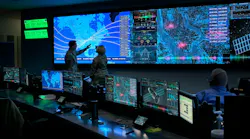
Selected teams will receive access to the lab's on-campus Space Object Situation Room, computing resources through the GaiaVerse platform, and a secure environment supported by the Texas Advanced Computing Center. Teams will also have access to university researchers, technical experts, government stakeholders, and guidance on pursuing Small Business Technology Transfer (STTR) awards.
Participating teams retain ownership of their respective intellectual property and may pursue STTR funding to continue development. Funding and selection for subsequent development phases are not guaranteed.
Related: DLR tests Prometheus rocket engine with repeated ignitions on upgraded P5 stand
The Texas Space Commission awarded UT Austin a grant of up to $9.27 million to establish the lab, making the university the first higher-education institution to receive commission funding. The award supports laboratory development, research and development, training, equipment, and related project costs.
The Texas lab is intended to provide a pathway for promising research to advance into the Colorado lab for further development and potential transition to operational Space Force programs. Progression between stages requires separate evaluation and is not guaranteed.
Space Systems Command, the Space Force field command responsible for acquiring, developing, and delivering space capabilities, oversees efforts to develop resilient systems and counter emerging threats.
About the Author
Jamie Whitney
Editor-in-Chief
Jamie Whitney joined the staff of Military & Aerospace Electronics in 2018 and oversees editorial content and produces news and features for Military & Aerospace Electronics, attends industry events, produces Webcasts, and oversees print production of Military & Aerospace Electronics.
Related
Voice Your Opinion!
To join the conversation, and become an exclusive member of Military Aerospace, create an account today!
 Leaders Logo
Leaders relevant to this article: