HOUSTON, Texas — DexMat, a Houston-based manufacturer of advanced carbon materials, plans to increase production of its Galvorn fiber under a new two-year U.S. Air Force research contract. The company already supplies the lightweight, electrically conductive material to customers in aerospace, defense and energy.
The Air Force Research Laboratory (AFRL) awarded the contract under the AFWERX Tactical Funding Increase program. It calls for DexMat to produce more than one kilogram of qualified Galvorn fiber for cathodes used in high-power microwave systems. Work began in August.
Related: BAE Systems develops cannon and microwave weapons for layered air defense
Developing lightweight conductive materials
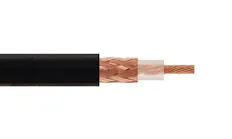
Galvorn is made from carbon nanotubes, extremely small cylindrical structures that can conduct electricity. DexMat manufactures the material as fibers, yarns, fabrics and films, giving customers several forms to use in different products.
According to the company, Galvorn has approximately 97% of copper's electrical conductivity when measured by mass, while its density is about one-fifth that of copper. Those properties could make the material useful in applications where manufacturers need electrical conductivity without adding unnecessary weight.
DexMat produces Galvorn at its Houston facility using a wet-fiber-spinning process.
Testing Galvorn cathodes for microwave systems
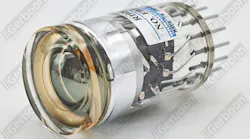
Cathodes emit electrons, and their performance can affect how much current certain microwave devices can generate. DexMat has worked with AFRL on this technology since Galvorn was under development at Rice University. The collaboration includes several earlier Small Business Innovation Research awards.
A 2023 study published in the Journal of Applied Physics found that knitted Galvorn fiber cathodes performed better than conventional carbon-fiber cathodes during continuous and pulsed field emission testing.
DexMat also reported that high-power microwave testing demonstrated more than 20 times the current density of the cathode material currently used in comparable systems. The company said the design could be manufactured more quickly and at lower cost, potentially making it easier to increase production.
“We've been working toward this since Galvorn was still a research project at Rice,” said Dmitri Tsentalovich, director of product innovation at DexMat. “AFRL has followed this cathode data for years. This contract is a bet on where that data goes next.”