DroneShield launches RfRecon portable RF intelligence system
Key Highlights
- DroneShield's new RfRecon system combines spectrum monitoring, direction finding, and signal analysis in a portable device for comprehensive RF intelligence.
- Supports a wide range of signals including Bluetooth, Wi-Fi, AIS, ADS-B, and GNSS, providing versatile threat detection capabilities.
- Focuses on bringing sensor processing closer to the tactical edge to enable quicker decision-making and reduce operational delays.
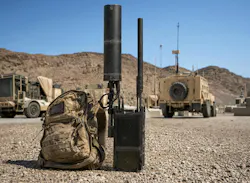
SYDNEY — DroneShield in Sydney, Australia, has introduced RfRecon, a portable radio-frequency (RF) intelligence system designed to help military and security operators detect, identify, locate, and assess signals in the electromagnetic environment.
The system builds on DroneShield's RfAI-3 intelligence architecture and combines spectrum monitoring, direction finding, and signal analysis in one portable device. The company designed RfRecon to give operators more context about RF activity without requiring several separate systems or extensive analysis in the field.
DroneShield expects the technology to support counter-UAS, electronic warfare, and other missions that depend on awareness of the electromagnetic spectrum.
The RF environment keeps getting busier
Military forces increasingly operate alongside drones, wireless communications equipment, sensors, and electronic warfare systems that all use portions of the electromagnetic spectrum. Detecting those signals represents only part of the problem. Operators also need to figure out where a signal comes from and what it may represent before deciding how to respond.
That analysis can require specialized equipment or trained personnel, particularly when several signals appear at the same time. DroneShield designed RfRecon to move more of that processing closer to the operator.
The system uses the company's RfAI-3 architecture to process collected RF information in the field. DroneShield said the approach can lessen operator workload while shortening the time between detecting activity and understanding it.
Direction finding adds location to signal detection
RfRecon combines ultra-wideband spectrum awareness with direction finding, giving operators a way to identify RF activity and determine its direction from the same platform.
DroneShield said the new system covers about six times more RF spectrum than previous industry-adopted solutions. It also provides four times more processing and AI compute, 31 times more storage, and eight times more memory.
The platform adds support for Bluetooth and Wi-Fi signals, Remote ID, Automatic Identification System (AIS), and Automatic Dependent Surveillance-Broadcast (ADS-B) detection. It also incorporates GNSS and hardware-based security.
Together, those capabilities allow the device to collect information from several types of emitters rather than focusing exclusively on drone control signals.
Portable sensors can feed a larger defense network
RfRecon can function on its own or as part of a broader sensing architecture. Operators can use the system while dismounted or install it on vehicles and at expeditionary locations.
The platform also connects with ATAK and third-party command-and-control software, allowing RF information collected in the field to move into systems operators already use to build a broader operational picture.
That interoperability becomes particularly important in layered counter-UAS systems. Detecting or locating a drone does not necessarily stop it. Operators may need to pass information to other sensors or effectors that can track the aircraft, disrupt its connection, take control of it, or defeat the threat.
RfRecon provides the RF intelligence portion of that process rather than serving as a standalone answer to every threat.
RF intelligence moves closer to the tactical edge
The introduction reflects a broader shift toward processing more sensor information near the point of collection. Sending raw data elsewhere for analysis can add time when operators need to make decisions quickly.
DroneShield is taking a similar approach to RF intelligence by putting sensing, processing, and analysis into a portable system that can operate closer to deployed personnel.
The company said it will continue updating RfRecon through its software roadmap as its RF intelligence capabilities develop. Those updates could allow the system to account for new signals and threats as the electromagnetic environment changes.
About the Author
Samantha McGrail
Associate Editor
Related
Voice Your Opinion!
To join the conversation, and become an exclusive member of Military Aerospace, create an account today!
 Leaders Logo
Leaders relevant to this article: