Why counter-drone systems need to detect what they don't recognize
Key Highlights
- RF sensors detect drone signals by analyzing unique RF fingerprints based on frequency and transmission patterns.
- Wideband RF sensing broadens detection capabilities by monitoring emissions across the entire spectrum, not just known signatures.
- When encountering unfamiliar signals, RfAI-3 creates new signatures and assesses confidence levels, aiding in threat identification.
- DroneShield plans to deploy RfAI-3 on next-generation hardware starting in 2026, with ongoing support for existing systems.
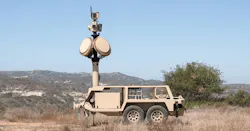
NASHUA, N.H. — Spotting a drone is one thing, but figuring out exactly what kind just entered an area can be much harder. Many drones exchange radio signals with a controller, carrying commands to the aircraft and information back to the operator.
Radio frequency (RF) sensors give counter-drone systems one way to tackle that problem. They listen for those signals without transmitting anything themselves, helping operators detect nearby aircraft. The harder part, though, is figuring out what produced the signal.
Related: Honeywell to lead SESAR eVTOL, cargo drone integration project
Known signatures only go so far
Many RF detection systems rely on libraries of known drone signatures. Engineers collect signals from different drones, study their characteristics, and add that information to a database. When similar activity appears later, software can compare it with those references and possibly identify the drone or communications protocol behind it.
That works well when the system recognizes what it's seeing. The challenge comes when something new enters the spectrum.
New commercial drones regularly reach the market, while operators can modify existing aircraft or introduce purpose-built systems. Communication methods can change, too. That means an RF sensor may eventually encounter activity that doesn't neatly match anything already stored in its library. For operators, the question then becomes how to handle a signal the system hasn't seen before.
What makes an RF signature recognizable
Radio signals differ in characteristics such as frequency and transmission patterns, which can help software distinguish one type of emitter from another. Those characteristics create a kind of RF fingerprint that a detection system can compare with information it has seen before.
That doesn't necessarily mean the system can identify a specific aircraft every time. The amount of detail depends on the signal and the information available in its library. Still, those patterns give the software a way to distinguish familiar activity from something it hasn't encountered before.
Starting with what's actually there
Wideband RF sensing handles that problem differently. Rather than beginning with a known signature and searching for a match, the system can look more broadly at emissions across the spectrum. Software then sorts through that activity and determines which signals resemble known references and which ones need more attention.
If the system recognizes an emission, it can classify it quickly. An unfamiliar one can still appear in the operating picture even when the system can't immediately put a name to it. That gives operators a chance to look at activity that might otherwise be difficult to categorize.
Unknown doesn't mean hostile
There is an important catch: the RF spectrum is busy. An unfamiliar signal could come from equipment completely unrelated to a drone. Even when a sensor determines that a drone is nearby, it still can't explain why the aircraft is there or whether it poses a threat.
This is where other counter-drone sensors can help fill in the gaps. Radar can track an object moving through the air, while electro-optical or infrared cameras can give operators a visual look at the target. RF sensing adds information about radio activity associated with the aircraft or its controller. Operators can then use those different pieces of information to build a better understanding of what they're dealing with.
The overall goal here is to give operators enough context to decide which activity deserves a closer look.
DroneShield applies the approach to RfAI-3
DroneShield is taking that approach with RfAI-3, the third generation of its RF intelligence engine. The company says RfAI-3 uses wideband detection to identify emissions before fingerprinting them against previously observed drone signatures. When the software finds a match, it can classify the emitter using information already stored in DroneShield's dataset.
When there isn't a match, the process changes. RfAI-3 generates a signature for the unfamiliar emission and presents it to the operator with a confidence assessment. The system ranks that information within the wider spectrum picture rather than discarding the signal because it doesn't recognize it.
The newly generated signature can then serve as a reference if the system encounters similar activity down the line. That capability builds on an RF intelligence dataset DroneShield has developed over several generations of the software.
The company introduced the original RfAI in 2018 to classify known drone emitters in real time. RfAI-2 followed in 2023 and expanded the dataset as DroneShield identified additional drone models, protocols and threat types. RfAI-3 keeps that existing intelligence while adding the ability to surface emissions outside the catalog.
DroneShield said it plans to introduce the software on its next-generation hardware platforms beginning in the second half of 2026, with additional releases expected through 2027. The company will continue supporting its existing products through its software subscription model.
About the Author
Samantha McGrail
Associate Editor
Related
Voice Your Opinion!
To join the conversation, and become an exclusive member of Military Aerospace, create an account today!
 Leaders Logo
Leaders relevant to this article: