Why can’t large drones just fly with regular air traffic?
Key Highlights
- Large uncrewed aircraft require advanced Detect and Avoid (DAA) systems to safely navigate shared airspace without onboard pilots.
- Reliable communication links between remote pilots and aircraft are critical, with procedures in place for handling lost connections to maintain safety.
- Air traffic control procedures must adapt to accommodate the unique behaviors and automation levels of remotely piloted aircraft.
- Cross-border operations demand consistent procedures and infrastructure to ensure safety as aircraft transition between different national airspaces.
- Simulation and integrated testing are essential to validate the interaction of technology, procedures, and human operators before widespread deployment.
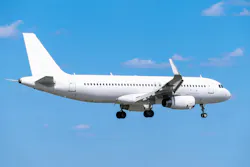
NASHUA, N.H. — Large uncrewed aircraft can operate without a pilot in the cockpit, flying hundreds or even thousands of miles and carrying substantial payloads. Getting one from point A to point B, however, is only part of the challenge.
Putting that aircraft into the same airspace as passenger jets, business aircraft and other traffic creates another set of problems. Pilots and air traffic controllers already follow established procedures to maintain separation and respond when something unexpected happens. A remotely piloted aircraft has to fit into that system without introducing unacceptable risk.
Today, moving beyond restrictions that remotely piloted aircraft follow requires more than proving that the aircraft itself can fly safely. Engineers and regulators also have to account for how it detects other aircraft, communicates with its remote pilot and responds when those systems do not work as planned.
Related: What is an uncrewed aircraft and how does it actually fly without a pilot onboard?
There is no pilot looking out the window
Pilots not only control an aircraft but also monitor nearby traffic and take action when another gets too close. Those tasks become more complicated when the pilot is sitting at a ground station instead of in the aircraft.
For smaller uncrewed aircraft flying within visual line of sight, a remote pilot or observer can watch the surrounding airspace from the ground. That approach does not work for a large aircraft traveling long distances beyond the pilot's view.
The aircraft needs another way to detect traffic and remain safely separated from it. EASA identifies air traffic control separation, collision-avoidance systems and Detect and Avoid technology among the methods that can perform that role when an uncrewed aircraft operates beyond visual line of sight.
Detect and Avoid does more than find another aircraft
Detect and Avoid, or DAA, is designed to provide electronically some of the awareness that an onboard pilot gets by looking outside. The basic idea sounds simple… detect another aircraft, determine whether it poses a conflict and avoid it if necessary. Making that happen reliably is a bit more complicated.
A DAA system can use airborne and ground-based equipment to help a remote pilot detect and avoid any vehicle. It first has to determine where nearby traffic is moving and whether the two flight paths could become a problem.
The challenge also changes depending on the airspace. In some controlled airspace, air traffic control provides separation between aircraft. In other environments, an RPAS could encounter traffic that ATC is not separating, and some nearby vehicles may not provide electronic information about their location.
That makes DAA particularly important when an uncrewed aircraft has to identify and respond to traffic on its own.
The pilot needs a reliable connection to the aircraft
Removing the pilot from the cockpit also puts a communications link between the person flying the aircraft and the aircraft itself. That command-and-control, or C2, link carries information between the remote pilot station and the aircraft. It allows the pilot to manage the flight and respond to changes or instructions from air traffic control.
Unlike the controls in a conventional cockpit, that connection can experience delays or disappear altogether. SESAR has identified communications latency and lost links as challenges when integrating RPAS with conventional air traffic.
That does not mean a plane simply falls out of the sky when the connection disappears. RPAS can have predetermined procedures for a lost-link event. Depending on the aircraft and operation, the flight-management system can follow a programmed course while controllers account for what the aircraft is expected to do. The FAA, for example, has specific air traffic control procedures for UAS lost-link events.
But for routine integration, controllers and other airspace users need to understand what an RPAS will do when that connection is interrupted.
Air traffic control has to account for a different kind of aircraft
The challenge is not limited to technology aboard the aircraft. Air traffic controllers need procedures for handling RPAS during normal flights as well as unexpected situations. Large remotely piloted aircraft may also behave differently from the conventional aircraft around them. Some fly considerably slower than jet airliners, and their level of automation can differ from that of crewed aircraft.
Controllers therefore need procedures that account for RPAS performance, levels of automation and interactions between Detect and Avoid and existing collision-avoidance systems. Recent European research has looked at controller workload alongside DAA performance for exactly that reason. The question is not simply whether an individual technology works, but rather whether the aircraft, remote pilot and controller can work together predictably in shared airspace.
Crossing borders adds another layer
A long-range uncrewed aircraft may also cross several national borders during a single flight. The vehicle cannot suddenly operate according to an entirely different technical concept each time it enters another country's airspace. Flight planning, air traffic procedures, communications and responses to abnormal situations have to remain consistent enough for the aircraft to continue operating safely as it moves between national airspace systems.
That is one reason European research programs are looking beyond the aircraft itself. The original SESAR IRINA project examined the infrastructure, air traffic management services and DAA capabilities needed for civil and military RPAS to operate in different classes of European airspace. Simulation allows engineers to test traffic encounters and procedures without putting aircraft into an unsafe situation. Eventually, though, the individual pieces have to work together.
A DAA system may detect traffic successfully in testing. A communications link may perform well on its own. Air traffic procedures may work in simulation. A representative flight can show how those pieces interact when the aircraft, remote pilot, controllers and surrounding traffic are all part of the same operation.
That is the larger challenge behind putting large drones into regular airspace. The aircraft already knows how to fly. The harder problem is making sure everyone sharing the airspace knows what happens next.
About the Author
Samantha McGrail
Associate Editor
Related
Voice Your Opinion!
To join the conversation, and become an exclusive member of Military Aerospace, create an account today!
 Leaders Logo
Leaders relevant to this article: