FAA proposes new path for overland supersonic flight
Key Highlights
- The current FAA restriction from 1973 is being replaced with a performance-based framework that evaluates noise, safety, and environmental impact rather than speed alone.
- Advances in computational modeling, materials, and propulsion have enabled engineers to design quieter supersonic aircraft, addressing previous concerns about disruptive sonic booms.
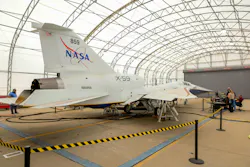
- NASA's X-59 research aircraft is collecting data on community noise perception, which will inform future noise standards and help reduce sonic boom impacts.
- The new regulations encourage manufacturers like Boom Supersonic and Spike Aerospace to develop innovative designs that could shorten long-haul flights and improve aircraft efficiency.
- The rulemaking process involves public comments and thorough certification requirements, with the goal of enabling safe, quieter supersonic flight in the future.
NASHUA, N.H. – For more than 50 years, flying faster than the speed of sound over land has largely been off limits for civilian aircraft in the United States. That rule dates back to an era when every supersonic flight produced a disruptive sonic boom that could be heard for miles.
Now, the Federal Aviation Administration (FAA) is proposing the first major update to those regulations in decades.
The agency recently published a Notice of Proposed Rulemaking (NPRM) that would begin replacing the decades-old speed restriction with a new certification framework for future supersonic aircraft.
The proposal does not authorize routine commercial supersonic operations. Instead, it opens the door to a different way of certifying aircraft as manufacturers develop quieter designs and new technologies.
Related: FAA advances Boeing 777X certification as widebody nears commercial service
Why the rule existed
The FAA adopted its current restriction in 1973, when supersonic passenger travel was still in its infancy. Aircraft such as Concorde showed that crossing the sound barrier created powerful shock waves that reached the ground as loud sonic booms. Those noise levels generated widespread public complaints, making regular overland operations impractical.
At the time, engineers had few tools for predicting and reducing those effects. Regulators responded by prohibiting civilian aircraft from flying faster than Mach 1 over land.
That rule remained largely unchanged for more than five decades.
Engineering has changed dramatically
Aircraft designers now have capabilities that didn't exist when the original regulation was written.
Engineers use computational fluid dynamics, digital modeling, and high-performance computing to assess thousands of design variations before building a prototype. Those tools make it possible to predict airflow and refine an airplane’s shape with greater accuracy than was possible decades ago.
Advances in materials, manufacturing, and propulsion have also expanded what designers can achieve. Together, those advances gave regulators new tools for evaluating future aircraft.
What a performance-based rule means
The proposed framework shifts the focus from speed to performance. Under the current rule, exceeding the speed of sound over land generally is not permitted regardless of how an aircraft performs.
A performance-based approach asks a different question: Can the vehicle meet established standards for noise, safety, and environmental impact? That distinction allows manufacturers to pursue new designs without assuming they will create the same level of community disruption as earlier supersonic aircraft.
Any plane approved under a future rule would still need to complete extensive certification before entering service.
Quiet supersonic flight remains the biggest challenge
Flying faster than sound is no longer the primary engineering hurdle, though. Now, the greater challenge is doing so without producing an unacceptable sonic boom on the ground.
Engineers are exploring several ways to reduce those effects.
One approach carefully shapes the aircraft so the pressure waves generated during flight combine differently before reaching the ground. Instead of producing a sharp bang, the plane may create a much softer pressure change that is less noticeable.
Researchers are also studying how altitude, atmospheric conditions, and flight profiles influence how shock waves travel through the atmosphere. Minimizing noise while maintaining aerodynamic performance remains one of the central challenges facing future supersonic aircraft.
NASA's research could help shape future standards
The FAA proposal arrives as NASA continues work on the X-59 research aircraft.
Unlike a commercial airliner, the X-59 is designed primarily as a flying laboratory. Its purpose is to collect data on how communities perceive quieter sonic signatures rather than carry passengers.
NASA plans to conduct community response flights over several U.S. cities, allowing researchers to compare measured noise levels with public feedback. Those results could help regulators establish future noise standards based on real-world data instead of assumptions from decades ago.
Related: NASA prepares X-59 for first supersonic flight after completing subsonic testing
Why airlines and manufacturers are paying attention
Although commercial supersonic aircraft remain several years away, manufacturers view the proposal as an important milestone.
A regulatory framework that looks at vehicles on measurable performance rather than speed alone provides a clearer path for companies investing in advanced aerodynamics, propulsion systems, and noise-reduction technologies.
Several manufacturers, including Spike Aerospace and Boom Supersonic, are developing new designs to shorten long-distance travel while addressing the concerns that limited earlier generations of supersonic flight.
For airlines and business aviation operators, shorter flight times could eventually improve aircraft utilization and reduce travel times on certain long-haul routes. Whether those benefits become reality will depend on successful certification as well as market demand.
What happens next
The FAA's proposal begins a public rulemaking process rather than changing the regulations immediately.
Before any new framework takes effect, the agency will review public comments and determine whether revisions are needed. Aircraft manufacturers would still need to demonstrate compliance with certification requirements covering noise, emissions, safety, and operational performance before commercial service could begin.
The rulemaking nevertheless marks a significant shift in how regulators view supersonic flight.
Instead of assuming every aircraft traveling faster than sound creates the same impact, the FAA is acknowledging that advances in engineering now make it possible to evaluate each design on its own merits. Whether that ultimately leads to routine overland supersonic travel remains to be seen, but it represents an important step toward modernizing regulations written for a very different generation of aircraft.
