Safran begins PHILEAS hybrid-electric engine ground testing
Key Highlights
- Safran's new ground testing campaign includes nearly 300 hours of testing at its open-air facility in Istres, France.
- The PHILEAS engine features electric machines that operate as motors or generators, enabling flexible power management during flight.
- Tests focus on electrical power extraction, transfer, and distribution across different engine operating conditions.
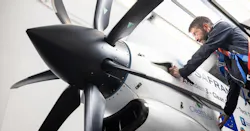
ISTRES, France — Safran Aircraft Engines, based in Courcouronnes, France, has begun a six-month ground testing campaign for its PHILEAS hybrid-electric engine demonstrator. This initiative advances technologies the company is evaluating for future commercial aircraft propulsion systems.
Supported by the French Civil Aviation Authority (DGAC), the program will evaluate how hybrid-electric components perform when integrated into a full-scale aircraft engine under operating conditions representative of flight. Engineers plan to conduct nearly 300 hours of testing at Safran's open-air test facility in Istres.
Related: What it will take to certify AI for commercial aviation
Demonstrator integrates electric propulsion technologies
PHILEAS is a full-scale engine demonstrator equipped with two electric machines installed on the high-pressure and low-pressure shafts. The machines can operate either as electric motors or as generators, depending on the engine's operating requirements.
The demonstrator also incorporates onboard power electronics and an electrical power distribution system. Together, those components allow engineers to evaluate how electrical power flows through the engine and how the systems operate together.
Campaign evaluates power management during flight
The test program focuses on how electrical power is extracted, transferred, and distributed throughout the engine during different phases of flight.
Engineers will evaluate power extraction from both the high-pressure and low-pressure shafts while testing several advanced power management strategies. Those include transferring electrical power from one shaft to the other and managing power exchanges between the engine and aircraft systems.
Safran said the work aims to maximize the electrical power available for onboard aircraft systems while maintaining engine performance throughout the flight envelope.
Aircraft manufacturers are increasingly exploring hybrid-electric propulsion to reduce fuel consumption and emissions while meeting growing electrical demands. Rather than replacing conventional gas turbines, hybrid-electric systems use electrical components to boost overall engine efficiency and provide additional onboard power.
Program supports future propulsion technologies
The PHILEAS demonstrator supports Safran's research into advanced propulsion systems. The company considers hybrid-electric propulsion one of three primary pathways in its decarbonization strategy alongside Open Fan engine architecture and greater use of sustainable aviation fuels.
The ground test campaign also aligns with the technology objectives of the CFM RISE program, which is developing propulsion technologies intended to reduce carbon dioxide emissions by 20% compared with today's commercial aircraft engines.
Safran Electrical & Power designed the demonstrator's electrical equipment, combining expertise in electrical systems and engine controls to support the program.
Program builds on earlier hybrid-electric testing
In 2023, the DOPEE program demonstrated a 300-kilowatt electric machine integrated into a Silvercrest engine. During that effort, engineers completed the first power extraction and injection tests on the engine's high-pressure shaft.
Since late 2025, Safran has also been conducting system-level testing in Niort using a test bench that simulates an 800-volt aircraft electrical network. Those evaluations support development of the electrical architectures needed for future hybrid-electric propulsion systems.
"We're proud to launch this ground test campaign, which marks another milestone in the maturation of hybrid-electric technologies," said Pierre Cottenceau, vice president of engineering, research and technology at Safran Aircraft Engines. "It represents a key step toward their integration into our future aircraft engines."
About the Author
Samantha McGrail
Associate Editor
Related
Voice Your Opinion!
To join the conversation, and become an exclusive member of Military Aerospace, create an account today!
 Leaders Logo
Leaders relevant to this article: