The Exploration Company adopts Siemens Xcelerator software to accelerate reusable spacecraft development
Key Highlights
- The Exploration Company uses Siemens software to connect mechanical, electrical, and simulation engineering in a single digital environment.
- Digital twins enable early performance validation, reducing late-stage design changes and development risks.
- The integrated platform supports the development of reusable Nyx spacecraft capable of operating with multiple launch vehicles.
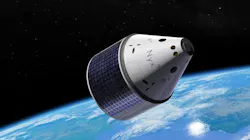
BERLIN — The Exploration Company, based in Germany, has adopted software from the Siemens Xcelerator portfolio to streamline development of its reusable spacecraft. The platform connects mechanical, electrical and simulation engineering within a single digital environment.
The European aerospace startup said the software will improve collaboration across engineering teams and boost development of spacecraft and propulsion systems as the company expands its reusable space transportation program.
Founded in 2021, The Exploration Company is developing the Nyx family of reusable spacecraft and rocket propulsion systems designed to transport cargo, and eventually crew, to destinations in Earth orbit and beyond. The company is building launcher-agnostic spacecraft that can operate with multiple launch vehicles, giving operators greater flexibility when selecting launch providers.
Related: Germany targets aviation growth with 15-year industry roadmap
Connected engineering environment supports spacecraft development
The Exploration Company is using Siemens Designcenter software for mechanical engineering, Simcenter software for simulation, Capital software for electrical systems design, and Teamcenter software for product lifecycle management.
Together, the software creates a shared engineering environment that connects design, electrical, and simulation work while maintaining a single source of product data. Engineers can make changes in one discipline and automatically update related models. This minimizes rework and improves configuration management as spacecraft designs evolve.
Digital twin supports early validation
The integrated toolchain also enables development of a digital twin, giving engineers the space to evaluate spacecraft performance before building hardware. By combining design models with engineering simulations, the digital twin predicts how systems will interact under expected operating conditions. Engineers can then identify integration issues earlier, reducing late-stage design changes and lowering development risk.
The approach also generates the traceability needed to support certification activities common in aerospace programs.
Simulation helps manage complex spacecraft systems
Modern spacecraft integrate mechanical structures, electrical architectures, thermal management, and other interconnected subsystems. Because changes in one area can affect another, engineers increasingly rely on simulation to look at system performance before manufacturing begins.
The Exploration Company said this approach improves mission assurance while allowing engineering teams to resolve issues earlier in development.
Development supports reusable spacecraft
The software will support continued development of the company's reusable Nyx spacecraft family. Nyx is designed to transport cargo to destinations in Earth orbit before returning for reuse. The company ultimately plans to expand the platform to carry crew while continuing development of reusable propulsion systems.
The Exploration Company said its engineering approach helped Mission Bikini, an orbital demonstration capsule, progress from initial concept to flight hardware in nine months. The company expects the software environment to support that pace as future spacecraft become larger and more complex.
"Our mission is to make space more accessible through reusable technology," said Daniel Prudente Martins, principal EWIS and electrical interfaces engineer for Nyx Avionics at The Exploration Company. "Working with Siemens and adopting its industrial software is helping us connect our engineering processes, reduce rework, accelerate development and streamline manufacturing as we scale our operations."
Siemens said the collaboration demonstrates how digital engineering tools can help aerospace manufacturers accelerate spacecraft development while supporting programs as they mature.
About the Author
Samantha McGrail
Associate Editor
Related
Voice Your Opinion!
To join the conversation, and become an exclusive member of Military Aerospace, create an account today!
 Leaders Logo
Leaders relevant to this article: