Artemis I data shows AstroRad vest can reduce radiation exposure
Key Highlights
- Artemis I data shows the AstroRad vest could reduce astronaut radiation exposure during major solar storms.
- Researchers measured radiation using two human-shaped phantoms during Orion’s 25.5-day journey around the Moon.
- AstroRad concentrates hydrogen-rich shielding around radiation-sensitive organs while preserving astronaut mobility.
- The results could help engineers balance shielding, mass and crew mobility as missions move farther from Earth.
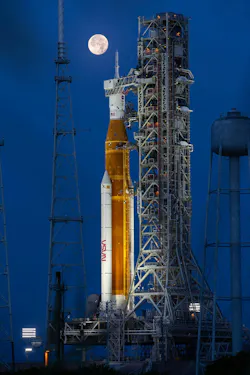
COLOGNE, Germany — Radiation measurements collected during NASA's Artemis I mission show that targeted wearable shielding could minimize astronaut exposure during major solar storms, according to results from the Matroshka AstroRad Radiation Experiment (MARE).
The German Aerospace Center (DLR)-led experiment sent two human-shaped measurement phantoms, Helga and Zohar, around the Moon aboard the Orion spacecraft in 2022. Zohar wore the AstroRad radiation protection vest developed by StemRad, while Helga made the trip without it.
Researchers used measurements from the 25.5-day mission to evaluate how effectively the vest protected radiation-sensitive organs. They also scaled data collected during Orion's passage through Earth's Van Allen radiation belts to conditions associated with historical solar storms.
For a strong solar event modeled on an August 1972 storm, researchers calculated that AstroRad could reduce effective radiation dose by approximately 60%. For a more energetic event modeled on an October 1989 storm, the reduction fell to just under 40%.
Related: DLR studies human-AI collaboration for future flight operations
Artemis I provided a test beyond low Earth orbit
Radiation becomes a larger concern as crews travel beyond the protection of Earth's magnetic field. Solar storms can release high-energy particles over relatively short periods, while galactic cosmic radiation creates a longer-term source of exposure.
MARE gave researchers a way to measure those conditions inside a crew-rated spacecraft traveling between Earth and the Moon.
Helga and Zohar replicate the torso of an adult woman and consist of 38 sections made from materials that represent the densities of bone, organs and soft tissue. Researchers placed thousands of passive dosimeters throughout the phantoms along with active radiation detectors from DLR and NASA.
The instruments continuously collected measurements as Orion traveled around the Moon and returned to Earth. Researchers then used the data to estimate radiation doses in different organs and tissues.
The experiment focused on female anatomy because women statistically face a higher risk of radiation-induced cancer. Researchers said the protective effect of the vest also applies to male astronauts.
AstroRad concentrates shielding around sensitive organs
Rather than covering the entire body with the same amount of shielding, AstroRad places more material around areas that are particularly sensitive to radiation. The vest uses a hydrogen-rich polymer to protect against proton radiation. Hexagonal shielding elements cover areas like the bone marrow, lungs, stomach, breasts and ovaries while allowing the wearer to move.
The version flown aboard Artemis I weighed about 26 kilograms on Earth. StemRad has continued working to lessen that mass since the mission.
Researchers also compared the targeted design with a theoretical full-body shield using the same total mass. Their calculations found the vest provided greater dose reduction while preserving more mobility than uniformly distributed protection.
Wearable shielding could complement spacecraft protection
Mass and volume make radiation shielding a difficult engineering problem for long-duration missions. Adding more protective material can minimize exposure, but every kilogram must compete with other spacecraft equipment and mission requirements.
Orion already provides another option during periods of elevated radiation. Astronauts can configure a protected area inside the capsule as a storm shelter when needed. Wearable shielding could complement that approach by allowing crew members to leave the protected area for necessary tasks while retaining additional protection.
The concept may become more relevant as crews spend longer periods beyond low Earth orbit. Larger spacecraft, lunar habitats and future Mars missions may expose astronauts to radiation environments for much longer than a trip around the Moon.
DLR continued its radiation research aboard Artemis II in 2026 using a newer generation of its spaceflight radiation detectors.
The Artemis I results give researchers flight data to compare different approaches as human missions move farther from Earth. For wearable protection, the challenge now includes balancing radiation shielding against the mass, mobility and practicality required for crews to use it during an actual mission.
About the Author
Samantha McGrail
Associate Editor
Related
Voice Your Opinion!
To join the conversation, and become an exclusive member of Military Aerospace, create an account today!
 Leaders Logo
Leaders relevant to this article: