How does an aircraft's flight control system work?
Key Highlights
- Aircraft rotate around three axes: pitch, roll, and yaw, controlled by surfaces such as elevators, ailerons, and rudders.
- Mechanical control systems use cables and linkages, while modern systems employ hydraulic or electric actuators for movement assistance.
- Fly-by-wire systems convert pilot inputs into electronic signals processed by flight control computers, enhancing precision and safety.
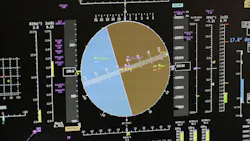
NASHUA, N.H. — When a pilot turns, climbs or descends, parts of the aircraft's wings and tail move to change its direction. A flight control system carries the pilot's commands to those moving surfaces, allowing the vehicle to respond. Older aircraft use cables and mechanical linkages to connect cockpit controls to the wings and tail, while many modern ones rely on computers, sensors and electronic signals to manage those movements.
Related: How aircraft land when pilots can't see the runway
What controls an aircraft's movement?
Aircraft rotate around three axes, known as pitch, roll and yaw. Each describes a different type of movement. Pitch occurs when the aircraft's nose moves up or down. Roll happens when one wing rises and the other falls. Yaw describes the nose turning left or right. Pilots control these movements through surfaces mounted on the wings and tail.
Ailerons, located near the outer trailing edges of most aircraft wings, control roll. They generally move in opposite directions, which changes the lift produced by each wing and causes the aircraft to bank.
Elevators control pitch by changing the aerodynamic forces acting on the horizontal tail. Depending on the aircraft's design, pilots may control pitch through conventional elevators, a movable horizontal stabilizer or an all-moving tail surface. The rudder, mounted on the vertical tail, controls yaw by producing a sideways aerodynamic force.
Vehicles also have secondary control surfaces. Flaps and slats help boost lift at lower speeds, particularly during takeoff and landing. Spoilers reduce lift and increase drag, and some aircraft use them to assist with roll control.
How do mechanical flight controls work?
In a mechanical flight control system, cables, rods and other linkages connect the controls to the aircraft's control surfaces. When a pilot moves the wheel or stick, those connections transmit the movement to the appropriate surface. Pressing a rudder pedal operates a separate linkage that moves the rudder.
This arrangement gives the pilot a physical connection to the control surfaces. However, moving those surfaces becomes more difficult as aerodynamic forces increase. Larger and faster aircraft often need additional power to operate their flight controls.
Hydraulic systems provide that assistance by using pressurized fluid to move actuators attached to the control surfaces. An actuator is a device that converts a command into physical movement.
Related: What is an aircraft transponder, and how does it work?
What is fly-by-wire?
Fly-by-wire replaces traditional mechanical connections between cockpit controls and flight control surfaces with electronic signals. When a pilot moves the control stick or pedals, sensors measure the input and send that information to flight control computers. The computers then process the command and instruct actuators to move the appropriate surfaces.
For instance, a pilot may move the control stick to request a particular roll rate rather than a specific aileron position. The flight control computers calculate the surface movements needed to produce that response. The rules governing these calculations are called control laws. They determine how the aircraft responds to pilot commands under different conditions.
Not every fly-by-wire aircraft uses the same approach, though. Some systems provide more computer assistance, while others preserve handling characteristics closer to those of conventional flight controls.
How do flight control computers use sensor data?
Flight control computers need information about the aircraft's movement and operating conditions before they can determine how its control surfaces should respond. Sensors measure characteristics such as airspeed, acceleration, rotation and control-surface position.
Inertial sensors detect changes in motion and orientation. Air data sensors measure conditions such as air pressure, which helps the aircraft determine its airspeed and altitude. Position sensors report where control surfaces are located, so computers can compare their actual positions with the commanded positions. The computers use these measurements to adjust control instructions as conditions change.
These calculations occur continuously during flight. As the aircraft accelerates, slows down or encounters turbulence, the computers update their instructions using the latest available measurements.
How do actuators move flight control surfaces?
Flight control computers calculate the required movements, but actuators physically reposition the control surfaces. Many commercial aircraft use hydraulic actuators. Pressurized fluid moves a piston inside the actuator, which pushes or pulls the connected surface. Valves control the fluid's movement and help the actuator reach the commanded position.
In electronically controlled hydraulic systems, electrical signals operate those valves. Some aircraft use electrically powered actuators instead. Electric motors drive mechanical components that move the control surfaces, lessening the need for hydraulic equipment in those locations.
Another design, known as an electrohydrostatic actuator, combines electrical power with a small hydraulic system. An electric motor operates a local pump that supplies pressure to move the surface. Each design involves trade-offs in power consumption, weight, maintenance and installation.
Engineers must also account for the forces acting on control surfaces during flight. An actuator needs enough power to move its assigned surface accurately, even when aerodynamic loads change.
How do flight control systems help maintain stability?
Aircraft can experience sudden changes in motion when they encounter turbulence or other disturbances. Flight control systems can help manage those changes by adjusting the control surfaces.
For example, a computer may detect an unexpected roll and command a correction, depending on the aircraft's control system and operating mode. Some fly-by-wire aircraft also include flight envelope protections.
An aircraft's flight envelope describes the range of operating conditions it is designed to handle. These include limits related to airspeed, angle of attack and structural loading. Angle of attack refers to the angle between a wing's reference line and the airflow approaching it. If it becomes too large, airflow can separate from the wing and cause a stall.
Depending on the aircraft, flight control software may limit certain commands to help prevent the pilot from exceeding defined operating boundaries. However, these protections vary between aircraft.
What happens if a flight control system fails?
Flight control failures can affect an aircraft's ability to maneuver, so engineers design many systems with backup equipment and fault-detection capabilities. An aircraft may have multiple flight control computers, independent electrical supplies or separate hydraulic systems. These arrangements can allow some functions to continue operating when individual components fail.
Computers can also compare measurements from different sensors. If one sensor reports information that disagrees with the others, the system may identify the problem and stop relying on that measurement.
Some fly-by-wire aircraft can switch to a different control mode following a failure. That mode may remove certain automatic functions or protections while preserving enough control for continued flight.
The available backup functions depend on the aircraft's design and the components affected. Redundancy improves reliability, but it cannot eliminate every possible failure. Engineers must also consider faults that could affect several components at once.
How are aircraft flight control systems tested?
Engineers test flight control systems throughout aircraft development to verify that they respond correctly to commands and operate safely under expected conditions. Testing begins with individual components, including sensors, computers, actuators and electronic connections.
Engineers then examine how those components work together. One method, called hardware-in-the-loop testing, connects actual flight control equipment to a computer simulation of an aircraft.
The simulation reproduces changing flight conditions while the equipment responds as though it were installed in an operating aircraft. Engineers can examine control commands, timing and system behavior without flying. This approach also allows them to introduce simulated component failures and evaluate how the system responds.
Ground testing checks actuator movement, control-surface operation and the connections between aircraft systems. During flight testing, pilots and engineers evaluate handling characteristics and control responses under real operating conditions.
About the Author
Samantha McGrail
Associate Editor
Related
Voice Your Opinion!
To join the conversation, and become an exclusive member of Military Aerospace, create an account today!
 Leaders Logo
Leaders relevant to this article: