What is an aircraft transponder, and how does it work?
Key Highlights
- Transponders respond automatically to ground interrogations, transmitting aircraft identification and altitude data to air traffic control systems.
- Different modes (A, C, S) provide varying levels of information, with Mode S supporting advanced features like selective addressing and additional data exchange.
- While transponders make aircraft electronically visible, systems like TCAS and ADS-B In use this data to help pilots detect nearby traffic and avoid collisions.
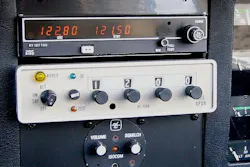
NASHUA, N.H. — An aircraft flying through controlled airspace needs a way to identify itself to air traffic control. Radar can help controllers determine that something is in the sky, but an aircraft transponder can give additional information about what they are seeing.
A transponder is an electronic device aboard an aircraft that receives a radio-frequency signal and sends a response. The name comes from its basic job of transmitting a response when it receives, or responds to, an interrogation.
For air traffic control, that exchange helps distinguish one aircraft from another and, depending on the equipment, can provide information such as the aircraft's identity and altitude.
The process happens automatically and quickly enough that pilots do not have to respond to each individual interrogation. Once operating, the transponder communicates electronically with compatible systems on the ground and aboard other aircraft.
Related: Why can’t large drones just fly with regular air traffic?
How does an aircraft transponder work?
Traditional air traffic surveillance can involve two types of radar. Primary surveillance radar sends out radio-frequency energy and listens for reflections from objects in the sky. If that energy reaches an aircraft, some of it can reflect back toward the radar.
Secondary surveillance radar works differently. Rather than relying on reflected energy alone, it sends an interrogation to an aircraft's transponder. The transponder receives that interrogation and transmits a coded reply.
The process happens repeatedly as an aircraft moves through radar coverage. Ground equipment can use the replies along with other surveillance information to help controllers identify and monitor aircraft.
In that sense, the transponder does not work like a radar aboard the aircraft. It is not sending signals into the surrounding airspace to search for airplanes. Instead, it listens for compatible interrogations and responds with information from its own aircraft.
Related: Why are there different kinds of radar?
What information does a transponder send?
The answer depends on the type of transponder and the operating mode. One of the most familiar pieces of information is the aircraft's squawk code, which the pilot enters into the transponder. The reply allows the surveillance system to associate that code with the aircraft being tracked.
Certain codes also communicate specific situations. In the United States, for example, pilots use 7500 for unlawful interference, 7600 for a radio communications failure and 7700 for a general emergency.
What are Mode A, Mode C and Mode S?
The terms Mode A, Mode C and Mode S describe different transponder capabilities. Mode A provides the aircraft's four-digit transponder code. This is the familiar squawk code.
Mode C adds pressure-altitude information. With both identification and altitude available, controllers can more easily distinguish aircraft and understand their vertical separation.
Mode S expands the exchange further. The “S” stands for selective because the system can selectively address individual aircraft. Mode S transponders use a unique 24-bit address for each aircraft and can exchange more information than earlier modes.
These modes are related rather than completely separate technologies. A Mode S transponder can support functions associated with earlier surveillance while adding capabilities of its own.
How is a transponder different from ADS-B?
Transponders and Automatic Dependent Surveillance-Broadcast, or ADS-B, are closely related in modern aviation, but the terms do not mean exactly the same thing. A traditional transponder responds when another system interrogates it. ADS-B Out periodically broadcasts information about an aircraft without requiring that kind of interrogation for each transmission.
ADS-B stands for automatic, dependent, surveillance and broadcast. It is automatic because it generally operates without pilots having to send each report. It is dependent because it relies on information from other onboard systems, including a position source. It supports surveillance by providing aircraft information, and it broadcasts that information for compatible receivers.
An ADS-B Out transmission can include an aircraft's position, altitude, velocity and identity. In the United States, aircraft can transmit ADS-B Out using either 1090 MHz Extended Squitter, commonly called 1090ES, or Universal Access Transceiver at 978 MHz, known as UAT. A Mode S transponder equipped for 1090ES can therefore serve as part of an aircraft's ADS-B system.
Does a transponder tell the pilot where other aircraft are?
Not by itself. A basic transponder primarily provides information from its aircraft to surveillance systems. It should not be confused with equipment that gives a pilot a display of surrounding traffic.
Other systems can use transponder signals and related surveillance information to help aircraft detect or display nearby traffic. Traffic Alert and Collision Avoidance System, or TCAS, for example, interacts with transponders aboard nearby aircraft to determine their relative positions and help identify potential collision threats.
ADS-B In can also receive broadcasts from appropriately equipped aircraft and other traffic information for display in the cockpit. That means several systems may work together even though they perform different jobs. The transponder makes an aircraft electronically visible to compatible surveillance equipment, while other avionics can use surveillance information to help a flight crew understand what is around them.
Why are aircraft transponders important?
Airspace can contain aircraft flying at different speeds, headings and altitudes. Knowing that a radar return exists is useful, but controllers also need to know which aircraft they are looking at and where it is operating.
Detecting an object and identifying it are not necessarily the same task. Primary radar can detect an aircraft from reflected radio energy without requiring a cooperative response from that aircraft. A transponder, by comparison, is a cooperative system. It receives an interrogation and provides a reply.
For the pilot, much of that exchange happens in the background. For the surveillance system, those short radio-frequency messages provide information that helps turn a point on a radar display into an identifiable aircraft moving through controlled airspace.
About the Author
Samantha McGrail
Associate Editor
Related
Voice Your Opinion!
To join the conversation, and become an exclusive member of Military Aerospace, create an account today!
 Leaders Logo
Leaders relevant to this article: