How AI is already changing commercial aviation—and why it still isn't flying the airplane
Key Highlights
- AI is primarily used to analyze operational data, improve efficiency, and support decision-making behind the scenes in commercial aviation.
- Machine learning helps optimize flight planning by evaluating weather, traffic, and fuel data to suggest safer and more efficient routes.
- Predictive maintenance uses sensor data and machine learning to identify potential issues early, reducing delays and unplanned repairs.
- AI-powered computer vision speeds aircraft inspections by analyzing images for damage, assisting technicians without replacing them.
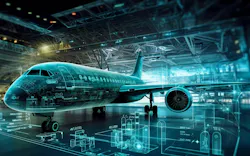
NASHUA, N.H. – Artificial intelligence is already influencing decisions across commercial aviation, but not the ones most passengers imagine.
Despite growing public interest in autonomous aircraft, today's AI systems rarely control the airplane itself. Instead, airlines, manufacturers, airports, and maintenance organizations are using machine learning to inspect aircraft and optimize flight planning. Many of those systems work behind the scenes, helping employees make faster, better-informed decisions rather than replacing them.
That approach reflects the realities of commercial aviation. Flight-critical systems must meet some of the world's most demanding certification requirements, leaving little room for technology that cannot consistently explain or reproduce its decisions. As a result, the industry's earliest AI applications have focused on operational tasks rather than flight-critical functions.
Engineers are applying AI to aviation systems that generate large amounts of operational data every day. From aircraft health monitoring to flight dispatch, those systems help airlines process more information than people could realistically analyze on their own.
Related: Germany targets aviation growth with 15-year industry roadmap
AI starts working long before an aircraft leaves the gate
For many airlines, AI begins improving flight hours before passengers board the aircraft.
Every day, airlines balance thousands of moving parts. Aircraft rotate between destinations, flight crews change assignments, and weather shifts across continents. Even small disruptions can ripple through an airline's entire network, delaying hundreds of flights before the day ends.
Machine learning helps airlines evaluate those variables faster than traditional planning software. Rather than relying only on fixed scheduling rules, AI models analyze operational data to identify patterns and recommend schedule adjustments.
Flight planning has become another major area of adoption. Before every departure, dispatchers determine the safest and most efficient route by considering weather, fuel requirements, winds aloft, and air traffic congestion. AI tools can process those variables simultaneously, helping dispatchers evaluate routing options that improve efficiency while complying with operational and regulatory requirements.
The technology also helps airlines respond when conditions change after a flight has already departed. Updated forecasts, air traffic delays, or temporary airspace restrictions can require route adjustments while an aircraft is en route. AI systems assist dispatch teams by analyzing revised conditions and identifying alternative routing options more quickly than traditional planning methods.
None of those systems fly the aircraft. Instead, they help operations teams evaluate more information in less time, allowing people to make faster decisions as conditions evolve.
Predictive maintenance helps airlines fix problems before they become delays
Maintenance has become one of the most practical applications of AI in commercial aviation. Modern aircraft generate enormous amounts of operational data during every flight. Thousands of onboard sensors continuously monitor engines, hydraulic systems, environmental controls, and other critical components, recording information that engineers can analyze long after the aircraft lands.
Historically, technicians relied on scheduled inspections and pilot reports to identify potential issues. Those methods remain essential, but AI allows maintenance teams to identify subtle changes that may indicate a component is beginning to deteriorate before it fails.
Rather than searching for a single fault, machine-learning models analyze trends across large data sets. For example, a slight increase in engine vibration or a gradual change in hydraulic pressure may not, on its own, trigger an immediate maintenance action. However, when combined with historical performance data from similar aircraft, those patterns can indicate that a part should be inspected or replaced before it causes an operational disruption.
That approach helps airlines schedule maintenance during planned downtime instead of responding to unexpected failures that can delay or cancel flights. It also allows operators to replace components based on their actual condition instead of strictly following fixed maintenance intervals.
Computer vision is changing aircraft inspections
AI is also speeding aircraft inspections. Routine inspections often require technicians to look at an aircraft for dents, cracks, corrosion, lightning strikes, and other signs of damage. While experienced inspectors remain responsible for determining whether an aircraft is airworthy, AI-powered computer vision systems can review thousands of high-resolution images to identify areas that deserve closer attention.
Many operators now combine those systems with drones capable of photographing an aircraft's exterior in a fraction of the time required for a traditional visual inspection. AI software compares those images with previous inspections or known damage patterns, allowing maintenance teams to focus on areas that require closer evaluation.
Despite its growing role, AI is not replacing certified inspectors. Instead, it serves as another tool, helping technicians reduce repetitive work and identify potential issues more quickly.
Why AI isn't flying the airplane
Although AI has found practical uses across airline operations, maintenance, and inspections, commercial aviation has not handed flight-critical decisions to machine-learning systems.
Aircraft software must meet rigorous certification standards, and regulators require engineers to demonstrate that safety-critical systems behave predictably under every operating condition. Unlike traditional software, some AI models can produce different outputs from similar inputs or make decisions that are difficult to fully explain. Until regulators establish certification frameworks that address those challenges, AI will likely remain focused on supporting pilots and maintenance teams rather than replacing them.
That distinction explains the industry's current approach to AI. For now, AI is becoming another tool for pilots, dispatchers, mechanics, and inspectors rather than a replacement for them.
About the Author
Samantha McGrail
Associate Editor
Related
Voice Your Opinion!
To join the conversation, and become an exclusive member of Military Aerospace, create an account today!
 Leaders Logo
Leaders relevant to this article: