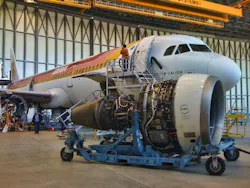
HAMBURG, Germany — The German Aerospace Center (DLR) has opened a new laboratory in Hamburg to test aircraft maintenance, repair and overhaul (MRO) technologies using a retired business jet with functioning onboard systems.
Located at the Center of Applied Aeronautical Research (ZAL), the MRO Living Lab lets researchers test inspection methods, automated maintenance equipment and digital tools under realistic workshop conditions.
The facility supports DLR's effort to consider maintenance needs earlier in aircraft development and improve long-term fleet operations.
Related: DLR tests Prometheus rocket engine with repeated ignitions on upgraded P5 stand
What technologies will DLR test?
Researchers will use the laboratory to study data-driven maintenance planning, including methods for predicting equipment problems and scheduling inspections. The facility will also support research into artificial intelligence (AI), robotic assistance and visual guidance systems that help technicians perform maintenance tasks.
Other projects will examine repair and modification methods for aircraft with limited access to internal components, along with ways to minimize material waste and improve supply chain resilience.
How was the aircraft modified for research?
The laboratory's central demonstrator is a business jet built in 1998. DLR removed one wing and one horizontal stabilizer to accommodate the aircraft inside the facility while preserving the operation of its flap and aileron controls. Researchers can collect sensor data through a specially modified door on the right side of the aircraft, including during cabin pressurization tests.
The aircraft also has two different exterior finishes. Its left side is painted, while its right side remains untreated. This means researchers can compare how surface conditions affect inspection and repair techniques, particularly nondestructive testing.
How will the lab support industry research?
The MRO Living Lab is part of DLR's MRO Application Center, which also houses laboratories dedicated to robotics, extended reality and measurement technologies. Researchers and students can use the facilities for testing and training, while industry partners can collaborate with DLR on maintenance technologies intended for practical applications.