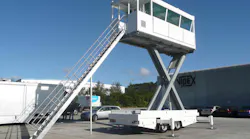
WASHINGTON — The Federal Aviation Administration (FAA) has begun operating digital air traffic control towers at two U.S. airports, using cameras and electronic displays to help controllers monitor aircraft movements and activity around the airfield.
The systems are now operational at Bartow Executive Airport in Florida and Kenai Municipal Airport in Alaska. According to the FAA, these are the first digital towers operating in the United States.
Related: FAA expands research into spectrum, communications risks of autonomous airport vehicles
How digital towers work
Rather than relying only on a direct view from a conventional control tower, the cameras show activity across the airfield, including taxiways and surrounding airspace. The images appear on electronic displays, giving controllers a continuous, 360-degree view of airport operations.
The systems also give controllers additional information to support air traffic decisions. Controllers remain responsible for managing aircraft and maintaining safe separation, while the digital equipment gives them more visual information to work with.
“Our air traffic controllers continue to do the critical job of keeping aircraft safely separated, and we're giving them better technology to do that,” FAA Administrator Bryan Bedford said.
FAA plans five more installations
The FAA plans to install digital tower systems at five additional airports that currently do not have control towers. The locations include Winter Haven Regional Airport and Venice Municipal Airport in Florida, Johnston Regional Airport in North Carolina and Durango-La Plata County Airport in Colorado.
The agency said the installations will receive funding through the Working Families Tax Cut Act. It did not provide installation schedules or details about the equipment suppliers in its announcement.